


From my experience in team coordination and process optimization, I’ve learned that crafting a Standard, Operating, Procedure is more than just documentation; it’s key to helping an organization run smoothly. It’s an essential part of building reliable systems, even when things get challenging. Clarity is vital; everyone should understand their jobs correctly and efficiently.
Effective SOP Development starts with a step-by-step guide to ensure quality and consistency. Like a recipe, it outlines tasks, sets standards, and defines processes. I use them to train team members, keeping us on the same page. A well-written SOP helps reduce errors, save time, and supports a productive work environment. It should be an effective, living document, which we review and update regularly.
As the company grows, SOPs must evolve, incorporate new procedures, and embrace technologies to stay competitive and adapt to changes swiftly. They’re part of a continuous journey to create valuable systems that ensure success, boost efficiency, and remain relevant through proper training and timely updates.
Summary:
- The SOP-Agent approach bridges AI automation with structured business procedures.
- It converts traditional SOPs into agent-driven workflows using clear, natural language.
- Ideal for domains like operations, support, QA, and compliance, SOP Agents reduce error and boost efficiency.
- As businesses scale, these intelligent agents evolve SOPs to adapt, learn, and perform autonomously.
A Practical Perspective for Modern Organizations
Understanding the Role of SOPs in Business
Over the years, I’ve worked with different organizations and businesses, and one of the most essential things I’ve learned is how Standard Operating Procedures (SOPs) can transform day-to-day work. These tools help streamline operations, address the needs of various stakeholders, and ensure consistency across processes.
SOPs are especially useful in meeting regulatory requirements, as they are designed to maintain quality and control. When implemented correctly, effective SOPs become part of the system that keeps things running smoothly, offering structure in even the most fast-paced environments.
We help organizations build practical, scalable SOP systems tailored to their teams. Learn more about our custom SOP development service that align with your specific industry and operational goals.
How to Define and Structure an SOP
When I help teams develop SOPs, I always emphasize making them detailed, written sets of instructions that employees can perform without confusion. Each SOP must guide the team through specific tasks, ensuring work is done correctly and consistently. These procedures often include safety protocols, standards for quality assurance, and ways to comply with internal and external regulatory requirements.
A good SOP is practical, with clarity, not weighed down by complexity. The language should be direct, and everyone should know exactly what to do. These standardized guides help teams uphold procedures in different situations, allowing organizations to build reliable processes that last.
Why an Effective SOP Adds Real Value
An effective SOP brings massive benefits to any organization. In my experience, well-designed SOPs help in maintaining a consistent performance, which is key for strong quality assurance. When roles and responsibilities are clear, employees are more confident, leading to fewer errors and reduced inefficiencies. This is critical for meeting the expectations of stakeholders and building trust through transparency.
SOPs also help comply with industry regulations, avoiding legal issues before they arise. A well-crafted SOP doesn’t just sit in a drawer—it helps improve workflow, enhance efficiency, and support team efforts. In every case, SOPs prove to be an indispensable part of organizational growth and reliability, turning strategy into sustainable action.
Building Clear and Effective Processes
Planning and Structuring SOPs the Right Way
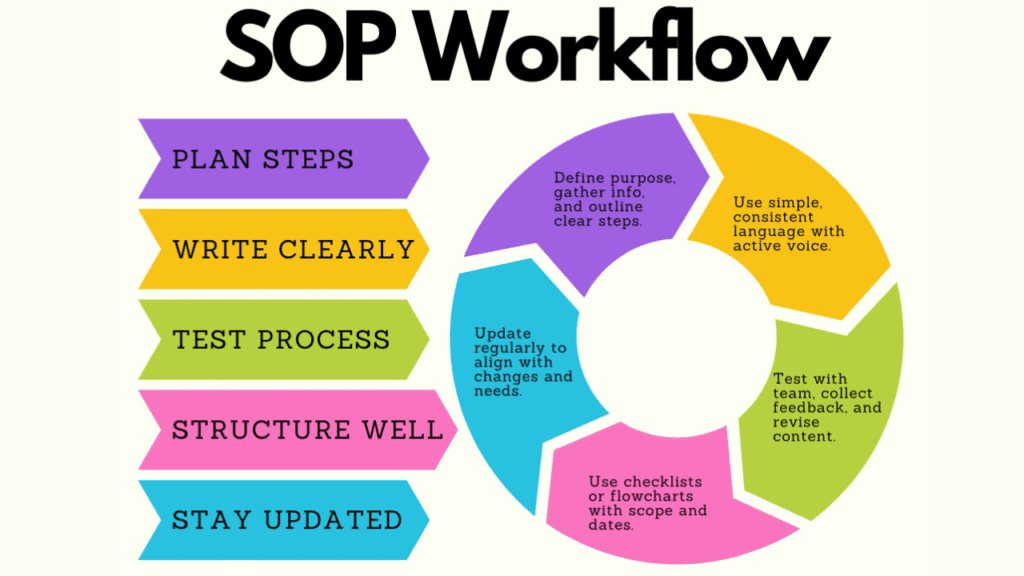
From my experience helping teams organize their workflows, the first step in SOP Development is planning the right format and creating a flow of clear, organized, and actionable steps. A well-defined process supported by best practices helps reduce confusion and speeds up onboarding. We start by identifying the purpose of the SOP and gathering information from experts, team members, and real-world cases.
Using a step-by-step layout, often with a flowchart or list, we outline tasks that are easy to follow and understand. A strong SOP is user-friendly and easy to revise based on feedback from test runs or real-life trials. These early choices set the foundation for an effective and reliable SOP.
Writing with Clarity and Consistency
When writing SOPs, I always focus on clarity, keeping the language simple, direct, and practical. Using an active voice makes instructions easier to understand, and having consistency in the terms and structure ensures no one gets lost in the details. A good SOP doesn’t overwhelm with complexity. It guides each employee through specific tasks to be performed correctly and consistently.
To keep SOPs relevant, we apply regular updates and involve a sample team in testing. Their insights help spot problems and drive continuous improvements. I’ve seen how documenting and revising regularly raises standards, improves efficiency, and boosts employee adherence to best practices.
Ensuring Lasting Impact Through Structure
To create SOPs that deliver long-term value, we must choose the right structure. Depending on the complexity, we might use hierarchical steps, checklists, or a visual overview with flowcharts and templates. SOPs should include all key sections like scope, purpose, and review dates. Having a logical order helps the reader understand the content without confusion.
A well-structured SOP makes it easier for team members to locate the information they need when performing procedures. In my work, this structured approach has led to smoother operations, higher-quality outcomes, and reduced training time, proving that structure is not just cosmetic. It’s fundamental to success.
Writing, Reviewing and Improving with Precision
Collaborating with Experts to Build Effective SOPs
When I help organizations with SOP Development, one of the first things I focus on is working with subject matter experts. These individuals provide accurate, essential information and insights into the actual tasks, helping us create detailed, step-by-step instructions. Their expertise ensures no critical detail is missed, and the content we produce reflects the real procedures teams follow daily.
It’s a cycle that involves drafting, gathering feedback, and revising the document to maintain quality and control. From my experience, this early collaboration sets the stage for an effective and well-aligned SOP.
The Power of Clarity and Feedback
Every SOP I’ve written begins with a clean outline and a clear draft. The procedure must be written in concise and clear language, ensuring that all instructions are easy to follow. Once the first version is ready, we include the team, especially those who will use the SOP, to test it in real-life settings. This is where feedback becomes practical, allowing us to refine the SOP based on what actually works.
A strong review process involves an iterative loop, suggest, improve, and test again, to build a user-friendly SOP. Over time, this process boosts consistency, improves performance, and makes sure the SOP stays relevant and useful.
Refining SOPs Through Quality Control
The final step in my SOP process is revision through strong quality control. After we gather final feedback, we begin to revise and integrate suggestions into the procedure. Then we perform checks to catch any errors, making sure each detail is correct and the SOP aligns with organizational goals and guidelines.
A well-revised SOP is not just about accuracy, it must also be easy to follow and practical. Regular reviews, updates, and adjustments as processes evolve are necessary to maintain its usefulness and effectiveness. A strong SOP will always help in guiding team members efficiently, saving both time and resources while maintaining high standards.
Training, Compliance and Cultural Integration
Implementing SOPs in a Business Environment
In my experience with different organizations, implementing Standard Operating Procedures in a growing business requires a sharp focus on training and compliance. It’s crucial to build a strong management system that supports smooth execution. A well-structured plan helps improve internal processes, ensuring that teams follow a consistent path.
We often create SOPs not just to control tasks but to strengthen the foundation of the organization. The ability to implement procedures efficiently has helped our teams operate more reliably. When effective systems are in place, SOPs truly support operational success and build a culture of accountability.
Building Understanding Through Training and Tools
Developing a successful SOP starts with training. It’s essential to help people understand and use SOPs correctly. I always recommend developing a clear program that fits the structure of your organization. Whether through online courses, interactive workshops, or hands-on sessions, training should meet your team’s needs.
Supporting tools like manuals, guides, and electronic data management systems make it easier to access procedures and updates. We also keep teams engaged with regular refreshers, open discussions, and active support. This improves everyone’s understanding and builds long-term consistency in following SOPs effectively.
Managing SOPs and Driving Compliance
Once training is in place, managing SOPs becomes the next important step. I always stress the need for regular reviews and updates that reflect changes in processes and industry standards. Studies like one by Forbes showed that 59% of businesses who maintain updated SOPs report greater efficiency, and 45% see better employee performance.
Assigning a team or individual as responsible for SOP management helps drive consistency and relevance. We also focus on communication, setting expectations, and tracking adherence through evaluations. Audits, feedback sessions, and a structured approach help us spot gaps, find opportunities, and improve. With tools to track, record, and monitor usage, SOPs become an integral part of our company’s culture.
Keeping Procedures Up to Date and Aligned
The Importance of Staying Current with SOPs
From my experience in operations and documentation, I’ve learned that keeping Standard Operating Procedures (SOPs) current is absolutely essential for meeting business goals and maintaining efficient, routine procedures. An outdated SOP can create confusion and slow down the workflow.
That’s why we must regularly review and revise our SOPs to align with best practices, policies, and any changes in our field. When teams follow up-to-date SOPs, the result is a more reliable and error-free system that supports overall organizational performance.
Reviewing, Updating, and Streamlining Processes
As part of our SOP improvement cycle, reviewing is key. We plan a schedule for reviews, like quarterly or semi-annually, to prevent procedures from becoming obsolete. During each review, we gather input from team members who use the SOP daily. Their feedback helps identify outdated steps, areas needing more clarity, or opportunities for improvement.
Once we have those insights, we highlight current practices, note required changes, and update the document. We also use automated tools and SOP software to streamline the process, making it easy to create, edit, share, and manage updates. Everyone gets quick access to the most recent version, helping ensure smooth adoption across teams.
Adapting to Change and Ensuring Alignment
One thing I always emphasize is the need to stay informed about industry changes. Whether it’s regulatory shifts, new technologies, or evolving best practices, staying current is crucial for maintaining effective SOPs. I often check industry news, attend workshops or webinars, and talk with peers to stay updated.
When major updates happen, we act fast to promptly update the SOP and reflect the latest standards. Using SOP software really helps us share updates widely, track versions, and stay aligned. This approach also helps reduce errors, enhance productivity, and ultimately achieve overarching goals more effectively.
Conclusion
In today’s fast-paced business landscape, effective SOP Development is essential for driving consistency, efficiency, and growth. By combining clear structure, practical training, and evolving automation through SOP Agents, organizations can streamline operations and adapt quickly. A well-crafted SOP is more than a document; it is a living system that ensures quality, empowers teams, and aligns with long-term goals. With regular updates and smart integration, SOPs become the backbone of sustainable success.
FAQ'S
SOP agents are automated systems or AI tools designed to create, manage, or execute Standard Operating Procedures (SOPs) based on predefined rules or workflows. They help ensure consistency, compliance, and efficiency across business operations.
A strong SOP begins with a clear title, defines its purpose, and sets the scope to outline what it covers. It assigns responsibilities for accountability and includes a clear procedure to guide actions. Adding safety steps and precautions helps prevent issues, while approval, revision, and history ensure it stays valid. These key elements form the foundation of an effective SOP template.
The four P’s of an SOP are Purpose, Procedure, People, and Protection. They define its core elements: why it's necessary, how tasks are performed, who is involved and their responsibilities, and the safety and compliance measures required. This foundational structure clearly outlines its function.
A Standard Operating Procedure (SOP) is a procedure specific to an operation that describes the activities needed to complete tasks in accordance with industry regulations, provincial laws, or internal standards for running a business.
SOPs provide a clear, repeatable structure that ensures consistency, reduces errors, and improves training and onboarding across teams. By standardizing processes, businesses can scale efficiently, meet regulatory requirements, and maintain quality as they grow. If you're ready to automate and enhance your operations, explore our SOP Agents Development services for tailored solutions.