

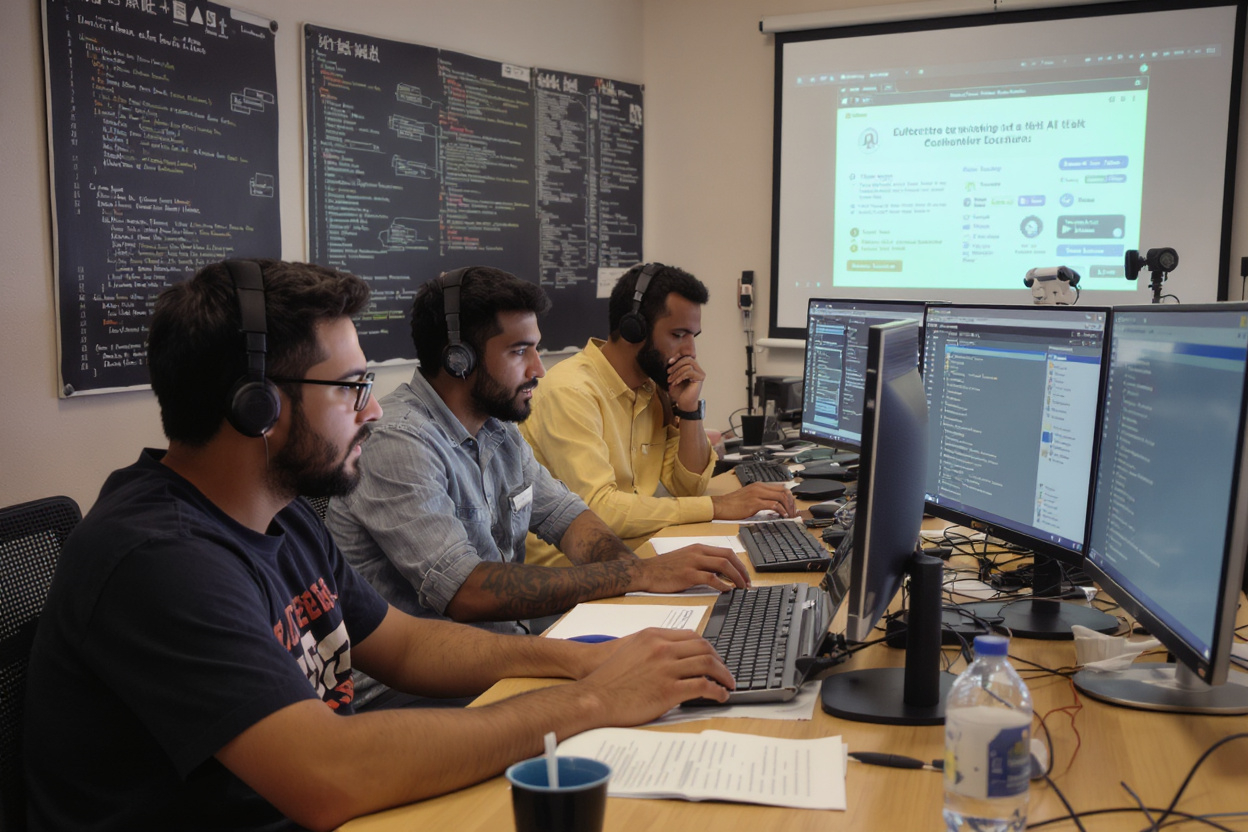
We have already witnessed how AI agents are reshaping education, moving beyond simple digital tools like grading systems or generative lesson plans into truly autonomous systems that act independently. In classrooms and digital learning environments, these agents have shifted from small experiments into meaningful applications supporting students, empowering educators, and streamlining institutional processes.
As we step into 2025, the conversation is no longer about whether AI agents work but about how we can scale them responsibly. The focus has turned to addressing challenges, ensuring ethical adoption, and building trust so these intelligent systems can deliver personalized instruction, enhance student engagement, and reduce administrative burdens on a large scale. This shift from experimentation to widespread implementation marks a defining moment in the future of learning.
Strengths and Weaknesses of AI Agents
Strengths of AI Agents in Education
We have seen that AI agents bring clear advantages when thoughtfully integrated into classrooms and institutions:
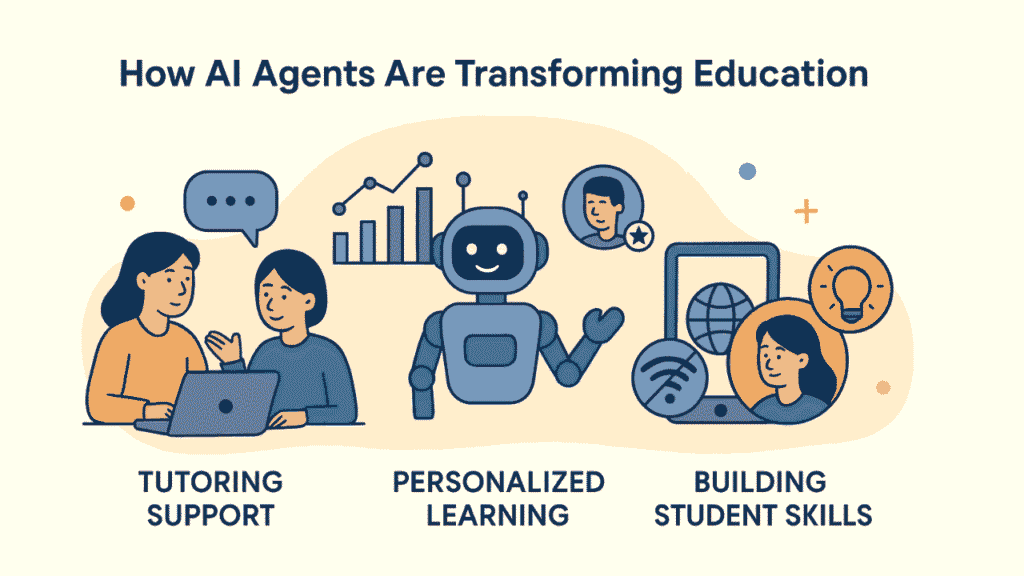
- Personalization: By analyzing student performance, agents create adaptive learning paths that tailor content, pacing, and delivery to individual needs. This level of hyper-personalization supports diverse learning styles and helps students grasp difficult concepts more effectively.
- Efficiency: Automating routine tasks such as grading, attendance tracking, scheduling, and course registration reduces the workload on educators, allowing them to focus on mentoring and direct instruction.
- Scalability: Unlike one-to-one tutoring limited by human capacity, AI agents can deliver personalized support to large lectures and global audiences, ensuring quality education at scale.
- Accessibility: With features like text-to-speech, speech-to-text, and adaptive interfaces, AI agents expand opportunities for learners with disabilities and bridge gaps in inclusivity.
- Real-Time Feedback: Students benefit from instant feedback on assignments and mistakes, with agents correcting errors, offering follow-up questions, and reinforcing understanding to accelerate learning.
Weaknesses of AI Agents in Education
At the same time, we recognize that these strengths come with important challenges:
- Data Privacy Risks: Because agents rely on large volumes of student data, there are concerns about unauthorized access, breaches, and compliance with regulations such as GDPR and FERPA.
- Digital Divide: Unequal access to devices, reliable internet, and digital literacy creates disparities, leaving underprivileged communities at risk of falling further behind.
- Dependence on Technology: Over-reliance on AI systems may reduce opportunities for students to develop critical thinking, creativity, and interpersonal skills that human interactions foster.
- Algorithmic Bias: Poorly designed algorithms can reflect and reinforce societal inequities, affecting outcomes for certain demographic groups unless regularly audited with diverse datasets.
- High Costs: Implementing and maintaining AI systems often requires substantial financial investment, which can strain underfunded schools and institutions.
By weighing both strengths and weaknesses, we ensure that the integration of AI agents remains effective, ethical, and aligned with the true mission of education.
Ethical and Practical Considerations
Data Privacy and Governance
We understand that AI agents depend on collecting and analyzing large volumes of student and institutional data to deliver personalized recommendations and proactive support. This raises serious concerns around privacy, security, consent, and governance. To maintain trust, institutions must adopt transparent policies that explain how data is accessed, used, and stored, while also ensuring compliance with laws such as GDPR and FERPA. Clear communication with students, educators, and parents strengthens confidence and ensures sensitive information remains protected.
Balancing Human Interaction and Automation
While administrative automation reduces workload and autonomous systems can act as always-available partners, we believe technology must complement not replace human connection. Teachers provide creativity, empathy, and emotional intelligence that machines cannot replicate. Effective adoption of AI means striking the right balance: allowing agents to manage routine tasks and surface data-driven insights, while enabling educators to focus on building relationships, fostering collaboration, and guiding the learning journey.
Transparency and Accountability
We know that AI systems are only as trustworthy as their oversight. Regular audits, monitoring, and explainability mechanisms are critical to prevent algorithmic bias, unintended outcomes, or unfair decision-making. By ensuring transparency, institutions create accountability, giving stakeholders the ability to review decisions and intervene when necessary. This level of governance ensures that autonomy never undermines fairness or ethical standards.
Equity and Inclusion
A critical part of responsible adoption is ensuring equitable access. The digital divide, caused by lack of devices, high-speed internet, or digital literacy, remains a barrier that could limit opportunities for some learners. To close this gap, governments, institutions, and private organizations must invest in infrastructure, provide subsidized resources, and offer training programs. Inclusive design, representative datasets, and ongoing evaluation are essential to ensure that AI agents serve all learners fairly, regardless of geography or socioeconomic background.
Future of AI Agents in Education
Human-AI Co-Teaching
We envision a future where teachers and AI agents collaborate to create more adaptive and responsive classrooms. In this model, instructors focus on emotional intelligence, creativity, and mentorship, while AI agents manage pacing, suggest content adjustments, and provide real-time adaptive feedback. This co-teaching approach preserves the human connection while leveraging the efficiency of technology.
Lifelong Learning Companions
We see AI agents evolving into persistent learning companions that follow students across grade levels, higher education, and even career transitions. These autonomous systems will remember learning preferences, recommend upskilling and reskilling opportunities, and provide ongoing guidance for lifelong learning. By acting as personalized partners, they ensure individuals remain prepared for a world where continuous education is essential.
Hybrid Learning Models
AI agents will strengthen the integration of online and offline education. By bridging physical classrooms with digital learning environments, they ensure that students receive consistent support regardless of setting. From facilitating synchronous discussions across locations to tailoring adaptive learning pathways for remote learners, hybrid models will combine flexibility with quality and accessibility.
Predictive Analytics for Proactive Education
We believe predictive analytics will shift education from reactive to proactive. By analyzing engagement trends, behavior patterns, and performance data, AI agents can identify signs of disengagement or risk long before failure occurs. Institutions can then allocate resources more effectively, support at-risk students, and improve outcomes on a systemic scale.
Democratized AI Development for Teachers
Thanks to emerging no-code and low-code platforms, educators themselves will design bespoke AI agents tailored to their unique teaching objectives. This democratization of AI development allows schools and universities to innovate without depending solely on large tech providers, fostering grassroots solutions that align closely with classroom realities.
Ethical AI Frameworks
As adoption expands, we know that ethical responsibility must remain central. Institutions will need frameworks to address privacy, bias, and equity, ensuring that AI systems are transparent, accountable, and inclusive. By embedding ethical standards from the start, we can build trust and align innovation with educational values.
🎓 Build a Student or Teacher AI Assistant
We develop Private Assistant solutions that personalize learning, give real-time feedback, and automate tasks like scheduling and attendance. Designed for classrooms and digital learning environments with privacy, transparency, and equity in mind.
Explore Private Assistant DevelopmentBeyond Education: Wider Impacts of AI Agents
Workforce Development and the Skills Gap
We see AI agents playing a pivotal role in preparing learners for the workforce by analyzing labor market trends and aligning education with emerging demands. These systems can design training modules that simulate real-world workplace challenges, helping learners build both technical skills like data literacy and coding, and soft skills like teamwork and adaptability. By bridging the skills gap, AI ensures students graduate not only knowledgeable but also job-ready.
Healthcare Training and Patient Support
In healthcare, AI agents are enhancing both training and patient care. They can simulate surgical procedures for medical students, support diagnostics by analyzing patient data, and even recommend personalized treatment plans. At the same time, they streamline administrative duties such as scheduling and records management, freeing healthcare professionals to focus on direct patient care and improving outcomes.
Lifelong Upskilling
We recognize that the modern professional must continuously adapt, and AI agents make this possible by supporting lifelong learning. Through micro-credentials, workshops, and just-in-time resources, agents create personalized learning pathways that allow individuals to upskill or reskill on their own terms. This makes continuous professional growth more inclusive, particularly for those in underserved or remote areas.
Global Collaboration and Real-Time Translation
By enabling real-time translation and providing cultural context, AI agents are breaking down communication barriers across borders. They allow educators, researchers, and professionals to collaborate seamlessly on global challenges such as climate change, healthcare disparities, and technological innovation. These systems foster more connected, diverse networks of knowledge-sharing that enrich both learning and problem-solving.
Policy and Governance Applications
Beyond classrooms and industries, AI agents are also influencing policy and governance. By analyzing complex datasets, they help decision-makers forecast societal trends, allocate resources more effectively, and evaluate long-term outcomes. In education, this means institutions can design curricula that reflect both current needs and future opportunities, ensuring students remain prepared for an evolving world.
Conclusion
We see the rise of AI agents as a turning point in education. These autonomous systems can deliver personalized learning, reduce administrative workload, and provide real-time feedback that improves outcomes. Their impact is clear, but success depends on balancing innovation with strong commitments to ethics, transparency, and equity.
By protecting privacy, addressing the digital divide, and ensuring fairness, AI agents can become trusted partners in the learning journey. Looking ahead, they will not only transform classrooms but also influence industries such as healthcare, workforce development, and global collaboration.
For us, the message is simple: AI agents are the foundation of the future of education and lifelong learning, and their thoughtful adoption will create more inclusive and effective learning ecosystems.