


Offshore outsourcing has become an essential strategy for companies aiming to optimize their core business activities and enhance productivity. By outsourcing projects to different countries, businesses can save costs while tapping into a wider pool of skilled professionals and expertise. This approach is particularly beneficial for budget-conscious startups or even large-scale businesses, enabling them to meet project deadlines and scale their operations more efficiently.
Whether it’s technical support, accounting, or back-office tasks, an outsourcing partner can help reduce costs by offering services at lower labor costs, which is a key factor in today’s competitive global economy. Beyond cost savings, offshore outsourcing also provides businesses with access to specialized skills and a chance to enter new markets, helping them remain agile and focused on their core competencies.
The flexibility to bring in expertise when needed can be a game-changer, allowing companies to focus on what truly drives their growth and success. As a widespread business practice, the benefits are clear, but understanding how to leverage offshore outsourcing effectively is crucial for any business looking to stay ahead.
60-Second Summary
Offshore outsourcing allows businesses to hire skilled workers from other countries to focus on their core tasks while reducing costs. You can either build your own team or partner with a company that offers the necessary expertise. These teams can support various services such as technology, software development, or managing everyday operations. The main advantages include cost savings and access to a global talent pool. To ensure success, it’s essential to prioritize cultural fit, clear communication, data protection, and relevant expertise when choosing an offshore partner. From my experience, businesses that focus on these factors achieve smoother collaboration and better outcomes.
What is Offshore Outsourcing?
Offshore outsourcing refers to the practice where companies hire workers from different countries to perform tasks usually done in their home country. This is part of the larger trend of business process outsourcing (BPO), where businesses outsource services like IT outsourcing, software development, designing a website, and maintenance and support to specialized professionals in developing countries.
By doing so, companies can reduce labor costs, gain access to skilled talent with specific domain knowledge, and enjoy impressive benefits like faster time to market and cost-effective talent. The demand for these services is growing, with the offshore outsourcing market expected to reach $389.7 billion by 2033, highlighting the promising future for such services.
Despite challenges like language barriers and working in different time zones, companies benefit from increased efficiency, advanced technology, and resources, helping them stay competitive and improve their customer satisfaction and profits.
When to Outsource Offshore vs Onshore
Offshore Outsourcing
Offshore outsourcing involves working with external providers in different countries to handle specific business functions. This approach can be beneficial for accessing specialized expertise and technology while keeping costs lower. For example, many businesses in the U.S. outsource customer service to countries like the Philippines, which offer skilled labor at a fraction of the price. Offshore outsourcing is a great option when a company is looking to tap into global talent pools, reduce labor costs, and enhance scalability.
Onshore Outsourcing
On the other hand, onshore outsourcing refers to contracting out work to a third-party provider within your own country. This strategy is ideal for businesses that want to avoid issues like language barriers or significant time zone differences.
For example, a U.S.-based walk-in clinic might choose to subcontract services like MRI and CT scans to a local radiology center. If a business needs local expertise or prefers to stay within the same workforce and resources, onshore outsourcing can be the better option.
Choosing Between Offshore and Onshore
The decision to choose between offshore outsourcing and onshore outsourcing depends on factors like cost, talent availability, operational needs, and scalability. If your business values local expertise, prefers to work within the same geographical proximity, or avoids managing time zones, onshore outsourcing could be the right fit.
On the other hand, if reducing labor costs, accessing specialized talent, and expanding business operations are more critical to your company’s success, then offshore outsourcing could provide a more advantageous solution. Additionally, outsourcing destinations with proximity, like nearshore outsourcing, can offer the benefits of minimizing time zone gaps and better communication through bilingual employees.
Types of Offshore Outsourcing Services
When considering offshore outsourcing services, it’s crucial to choose the right type of service that aligns with your business needs. There are several types of outsourcing services available, each offering unique benefits for businesses across various industries. Whether you’re a small startup or a multinational corporation, offshore outsourcing can provide significant cost-saving opportunities and access to a large talent pool. This is especially valuable when your business is seeking to expand its human resources or streamline business processes.
IT Outsourcing Services
One of the most popular categories is IT outsourcing. Many businesses, especially those in tech, require technical demands that their in-house team may not be able to handle effectively. By outsourcing tasks such as help tickets, tech support, hardware installation, and software setup, companies can ensure smooth operations without overburdening their local staff.
This type of outsourcing is especially beneficial for businesses that experience fluctuating demand or need to operate across different time zones. Working with a BPO company specializing in IT services guarantees scalability, allowing your business to grow and adapt quickly.
Customer Support Outsourcing
Another service gaining traction is Customer Support outsourcing. By hiring skilled agents through call center outsourcing, businesses can address customer queries through email, phone calls, chat, and even social media.
This is ideal for companies aiming to enhance customer satisfaction and improve their service efficiency. Whether your support center is onshore or offshore, outsourcing these activities can save costs while ensuring your customers receive quick, reliable responses.
Web Development and Software Development
For those in need of Web Development or Software Development, outsourcing these tasks can lead to reduced costs and access to a broader skill set. Web developers and software engineers in offshore locations often offer their services at a reduced rate, while delivering the same high quality of work as local professionals.
Whether it’s developing mobile apps for smartphones and tablets, or building desktop programs, outsourcing allows companies to tap into global expertise in coding, programming, and UI/UX design.
Bookkeeping and Accounting Outsourcing
If your company handles a lot of financial tasks, bookkeeping and accounting services are often outsourced to ensure accuracy and efficiency. Whether it’s recording transactions, preparing financial statements, or managing accounts receivable and accounts payable, outsourcing these services to an experienced partner ensures compliance with tax codes, accounting practices, and financial regulations.
Knowledge Process Outsourcing (KPO)
Some businesses also opt for Knowledge Process Outsourcing (KPO) to delegate high-level tasks that require business analytics, market research, or consulting. KPO offers businesses the ability to focus on core activities while improving business efficiency and boosting revenue. Countries like India and the Philippines are popular hubs for these services, with access to specialized expertise that is often unavailable in-house.
Business Process Outsourcing (BPO)
When considering Business Process Outsourcing (BPO), you should assess whether your company needs support with non-IT tasks such as backend operations, finance, or customer support. Companies like Amazon have successfully leveraged BPO to manage operations such as sales, telemarketing, and administrative work. By outsourcing these functions, you not only reduce overhead costs but also gain access to highly skilled professionals who can help your business thrive.
Creative Services Outsourcing
Lastly, don’t overlook creative services outsourcing. Tasks like content creation, video production, and graphic design can be efficiently managed by third-party providers. This allows your business to focus on growth while benefiting from the creativity and expertise of specialized teams.
Why Offshore Outsourcing Benefits Your Business?
Offshore outsourcing offers businesses an incredible opportunity to improve efficiency and focus on what they do best. By delegating certain business processes to trusted outsourced partners, companies can free up their core team to focus on market research, marketing efforts, and other core activities.
In my experience, offshoring has been an excellent way to grow a business without overburdening in-house teams. The beauty of outsourcing is that you can focus on your core competencies, while the outsourcing provider handles tasks that require specific expertise.
Cost-Saving Opportunities
One of the major advantages of offshoring is the cost-saving potential. With outsourcing, businesses can reduce overhead costs, such as salary, benefits, office space, and equipment. Instead of hiring full-time staff for certain roles, you can pay for the work done and get access to specialized talent at much more affordable rates.
This pricing flexibility can really change the direction of a business strategy, giving your company the financial freedom to explore other growth opportunities. In my business, this has resulted in a significant drop in operational expenses, allowing us to reinvest into product development and customer engagement.
Quality Control and Efficiency
Sometimes internal teams lack the specialized skills or resources to handle a task effectively. With outsourcing, you get the chance to tap into a skilled workforce that specializes in specific areas. For instance, companies often turn to outsourcing for quality assurance or software maintenance, tasks that require attention to detail.
From my experience, outsourced partners bring a level of expertise and commitment that enhances the efficiency of the entire operation. If there are issues with a project, outsourcing allows you to quickly bring in additional resources to solve the problem, ensuring that it doesn’t affect your timeline.
Leverage Time Zone Advantages for Round-the-Clock Support
Offshoring can also provide businesses with time zone advantages. This is especially helpful when you need round-the-clock support. Imagine having your customer care lines staffed all day and night without having to worry about paying high midnight shift salaries.
Outsourced partners working in different time zones can handle your business functions while you sleep, offering a continuous flow of operations. This cost-effective strategy has been beneficial for companies that deal with global customers, as it keeps the business running 24/7 without the associated costs of maintaining an in-house overnight team.
Access to a Skilled Workforce at Lower Costs
One of the main reasons businesses choose offshore outsourcing is to access low-cost labor from developing countries. Countries with lower living costs and wages offer businesses the chance to tap into a skilled workforce at a fraction of the cost.
For example, a developer in a country like India may cost significantly less than a developer in the USA or Canada, but still provide the same high level of expertise. This cost-saving benefit enables businesses to invest in other areas, such as product innovation or customer engagement, while receiving top-tier work at affordable prices.
Increased Efficiency and Focus on Strategic Tasks
When you hire an offshore service provider, you gain access to resources that can increase your internal team’s efficiency. By outsourcing certain tasks, businesses allow their in-house teams to focus on high-priority, strategic tasks. This not only enhances efficiency but also ensures that projects are completed faster, without sacrificing the quality of the work.
By bringing in experts who specialize in particular tech stacks, companies can meet tight deadlines without overworking their employees. In my case, this has led to quicker project delivery, higher-quality products, and more satisfied customers.
Flexible Laws and Fewer Regulatory Bottlenecks
Another important benefit of offshoring is the potential for less regulatory bottlenecks. In many cases, businesses can take advantage of the more flexible laws in the country where their outsourced partners operate. For example, some countries have less stringent labor laws or tax regulations, which can be a huge advantage for companies looking to streamline their processes. This flexibility allows businesses to scale faster and take advantage of new opportunities without getting bogged down in red tape.
Potential Risks Involved in Offshore Outsourcing
Goal Misalignment:
-
Operational objectives may not align with broader business goals.
-
Solution: Define SMART goals and clearly outline them in the Service-Level Agreement (SLA).
Communication Barriers:
-
Language and time zone differences can cause delays and misunderstandings.
-
Solution: Choose English-proficient outsourcing destinations, be selective in recruitment, and provide language training programs.
Cultural Differences:
-
Variations in work ethics, styles, and practices may lead to inefficiencies.
-
Solution: Orient BPO teams and bridge cultural gaps.
Lack of Control:
-
Overdependence on the outsourced provider can create challenges.
-
Solution: Ensure regular communication, set quality control measures, and track progress continuously.
Security Issues:
-
Cyberattacks or physical attacks could compromise sensitive data.
-
Solution: Implement data privacy policies and network security protocols.
Regulatory Compliance:
-
Noncompliance with local laws could result in financial and legal consequences.
-
Solution: Study and adhere to local laws and regulations.
Business Disruptions:
-
Natural calamities, geopolitical issues, and holidays may affect operations.
-
Solution: Maintain an in-house team for essential operations and have a contingency plan.
Why Businesses Choose Offshore Outsourcing?
Cost Savings and Access to Talent
Offshore outsourcing is a popular strategy that allows companies to save costs and access top talent from around the world. When businesses choose to outsource, they avoid the costs of setting up an office, buying equipment, hiring personnel, and providing training programs. This also helps to eliminate the insurance costs and fixed salaries for employees.
For example, many American companies have successfully reduced expenses by outsourcing to countries like India, where a vast pool of talented IT developers is available at a much lower cost.
Strategic Focus and Delegation
One of the main reasons businesses are attracted to offshore outsourcing is the opportunity to delegate critical projects while still focusing on strategic goals. Through offshore outsourcing, businesses can focus on creating strategies and making decisions, while relying on external vendors to handle the technical aspects.
This allows them to scale without having to set up a full-fledged development department. As Deloitte found in a survey, 59% of businesses choose India as their outsourcing destination due to its competitive advantages. Companies like Apple also partner with firms like Foxconn in China to deliver high-quality electronic products while maintaining low production costs.
Offshore Development Centers and Outsourced Product Development
There are two primary ways businesses handle offshore outsourcing. One is by setting up an offshore development center, where they establish an office in another country with a dedicated team of engineers. This model helps businesses leverage lower costs while maintaining closer control over operations. The other way is outsourcing product development, which involves hiring a company to handle specific stages of a product’s development cycle.
These strategies allow businesses to meet their needs without the burden of operational objectives or worrying about quality control. Furthermore, these models often align with a company’s business goals and can be formalized in an SLA (Service-level Agreement), ensuring a well-defined relationship between the company and the provider.
Best Practices for Ensuring Offshore Outsourcing Success
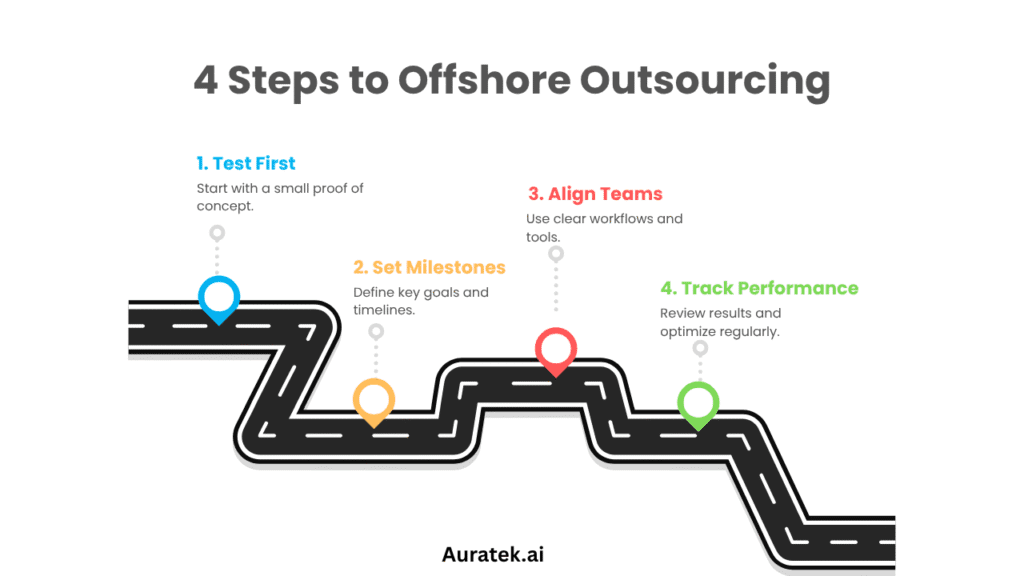
To guarantee success in offshore outsourcing, it’s essential to follow a few best practices. Start by revisiting your SLA and adjusting KPIs when needed to ensure your provider meets the required metrics. Support your provider when necessary and maintain business control by staying proactive and communicative in your outsourcing engagement.
Constant interaction is crucial, so establish seamless communication channels and schedule regular check-ins and meetings with your BPO team. Additionally, invest in reskilling and upskilling your workforce by collaborating with your BPO partner to provide training programs. Keep up with the latest technology, including AI, automation, and cloud-based platforms, to gain a competitive advantage.
Regularly measure performance by setting clear KPIs, monitoring progress, and identifying strengths and weaknesses. Lastly, continuously optimize your operations by tracking performances, maintaining best practices, and making necessary adjustments to improve your outsourcing efforts.
How to Find the Right Offshore Outsourced Partner?
Finding the right partner for your business needs in the world of offshore outsourcing might feel overwhelming at first. However, with the right approach, it’s entirely possible. Business owners and team leaders often struggle with identifying where to start, but with Auratek, this process is made much simpler.
With contacts spanning across the globe, we help connect businesses of all sizes, from a startup to a large corporation, to the ideal offshore outsourcing partners. Whether you need large teams to handle a huge workload or smaller expert teams for specific valuable detail, Auratek has the resources and expertise to help guide you to the perfect match.
When it comes to your specific needs, don’t hesitate to give us a call. We work with a broad range of industries and services, making sure that the partner we connect you with fits your exact requirements.
Whether you’re looking for a partner to provide the service your business demands or a team to manage a detailed project, Auratek is committed to helping you find exactly what you need in an offshore outsourcing partner. Rest assured, we are here to assist you in every step of the process and ensure that your business is well-equipped to grow and succeed. Check Out our software project management services that helps businesses to stand out in the market.
Conclusion
Offshore outsourcing offers businesses a strategic way to reduce costs, access specialized talent, and enhance scalability. By delegating tasks to skilled professionals in different countries, companies can focus on core competencies while maintaining efficiency and competitiveness. Despite potential risks like communication barriers or cultural differences, with the right planning and partner selection, businesses can reap significant rewards. Ultimately, offshore outsourcing allows businesses to grow and adapt without the burden of managing every operational detail in-house.
FAQ'S
One example of offshore outsourcing is when a company in the United States decides to contract a software development project to a firm in India. The Indian firm takes care of the entire development process remotely, utilizing its skilled workforce to complete the project while offering cost-effective services. This allows the company in the United States to focus on other priorities while benefiting from expert help at a lower cost.
Skilled talent, the latest technology, and necessary resources to improve their services. By leveraging these advantages, businesses can achieve higher customer satisfaction, increase their revenues, and ultimately drive business growth. In my experience, this strategy helps companies focus on their strengths without worrying about expensive overheads, ensuring they stay competitive in the market.
Offshore outsourcing can be very beneficial for businesses. It helps companies reduce labor costs, increase efficiency, and lower risk while gaining access to new markets. By focusing on their core competencies, businesses can save costs and achieve better results. In my experience, when done right, offshore outsourcing brings strong growth opportunities and a chance to optimize resources for long-term success.
Industries like software development, customer support, manufacturing, and data processing often use offshore outsourcing to reduce costs and scale operations efficiently with global talent.
Common risks include communication barriers, time zone differences, data security concerns, and quality control issues. However, these can be managed with clear contracts, strong collaboration tools, and proper vendor selection.